A countertop gets more daily wear than anything else in the kitchen, so it pays to choose it for how you cook and clean as much as for its looks. These are the materials we sell and what each is like to live with.
Quartz
Quartz counters are engineered: ground quartz mixed with resin and pigment and pressed into slabs. The pattern is consistent from one end to the other. The surface is nonporous, so it resists stains and never needs sealing. The resin is the weak spot. A pan straight off the burner can scorch it, so use a trivet. The twelve brands we carry include Caesarstone, Cambria and Silestone.
Granite
Granite is natural stone cut from a quarry, and no two slabs match. It takes heat better than anything else on this list. Most granite should be sealed from time to time to keep oil and wine from soaking in, and how often depends on the stone. If you like the idea of picking out one particular slab, granite is the one for you.
Marble
Marble is softer than granite and it reacts with acid. Lemon juice or vinegar left on a polished marble top leaves a dull spot called an etch, and marble stains more easily too. Some people love the worn look a marble counter takes on after a few years. If you want a counter that stays looking new, put marble on a vanity or a baking area and use something tougher by the stove.
Solid Surface
Solid Surface is made up of mostly natural minerals. Resins, fillers and color pigments are added making the material non-porous, flexible enough to shape, and seamless to join. Colorants and small particulate chips are mixed in during manufacturing to create various solid colors, patterns, or looks that mimic granite and marble. Corian is the best-known brand. Seams between pieces are nearly invisible, and the sink can be made of the same material and joined to the counter with no rim to catch crumbs. It scratches more easily than stone, but the scratches can be sanded out. Keep hot pans off it.
Our shop is certified to fabricate Solid Surface, so we make these counters ourselves in Hicksville.
Butcher block and wood
A wood counter needs oil or a durable finish, and standing water near a sink is its enemy. On the other hand it is the easiest to renew: sand it, refinish it and it looks new. Walnut and cherry make handsome island tops, and maple butcher block is the classic work surface.
Laminate
Laminate, which many people call Formica after the best-known brand, costs the least and comes in the most patterns. It handles everyday use well. It can’t take a hot pan, and a burn or a chip can’t be repaired, so plan on cutting boards and trivets.
A quick comparison
| Material | Upkeep | Watch out for |
|---|---|---|
| Quartz | Cleaning only | Hot pans |
| Granite | Seal from time to time | Oil stains if left unsealed |
| Marble | Seal, and wipe spills quickly | Etching from acid, stains |
| Solid Surface | Cleaning only; scratches sand out | Hot pans, knife marks |
| Wood | Oil or refinish | Standing water |
| Laminate | Cleaning only | Hot pans, chips |
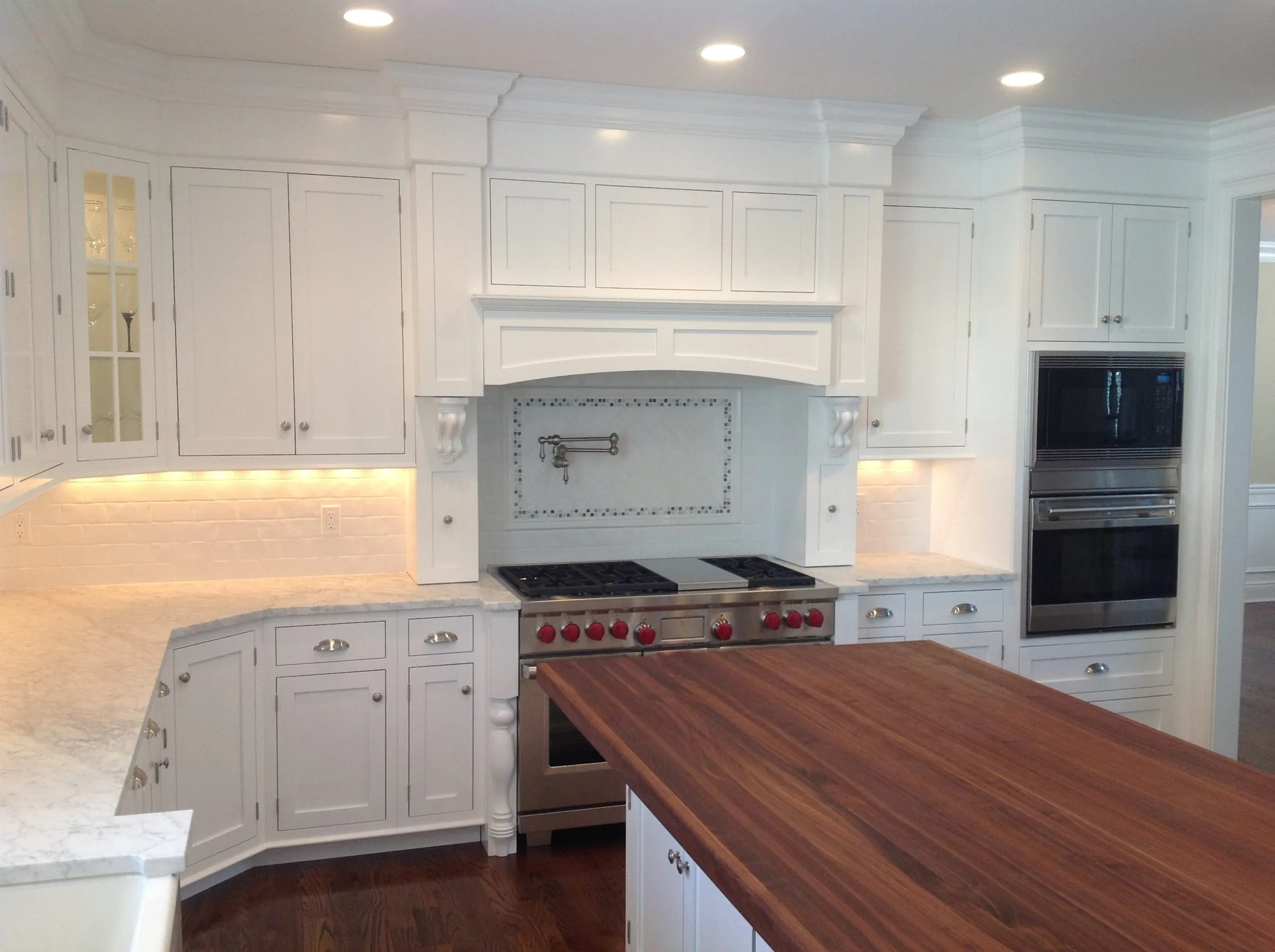
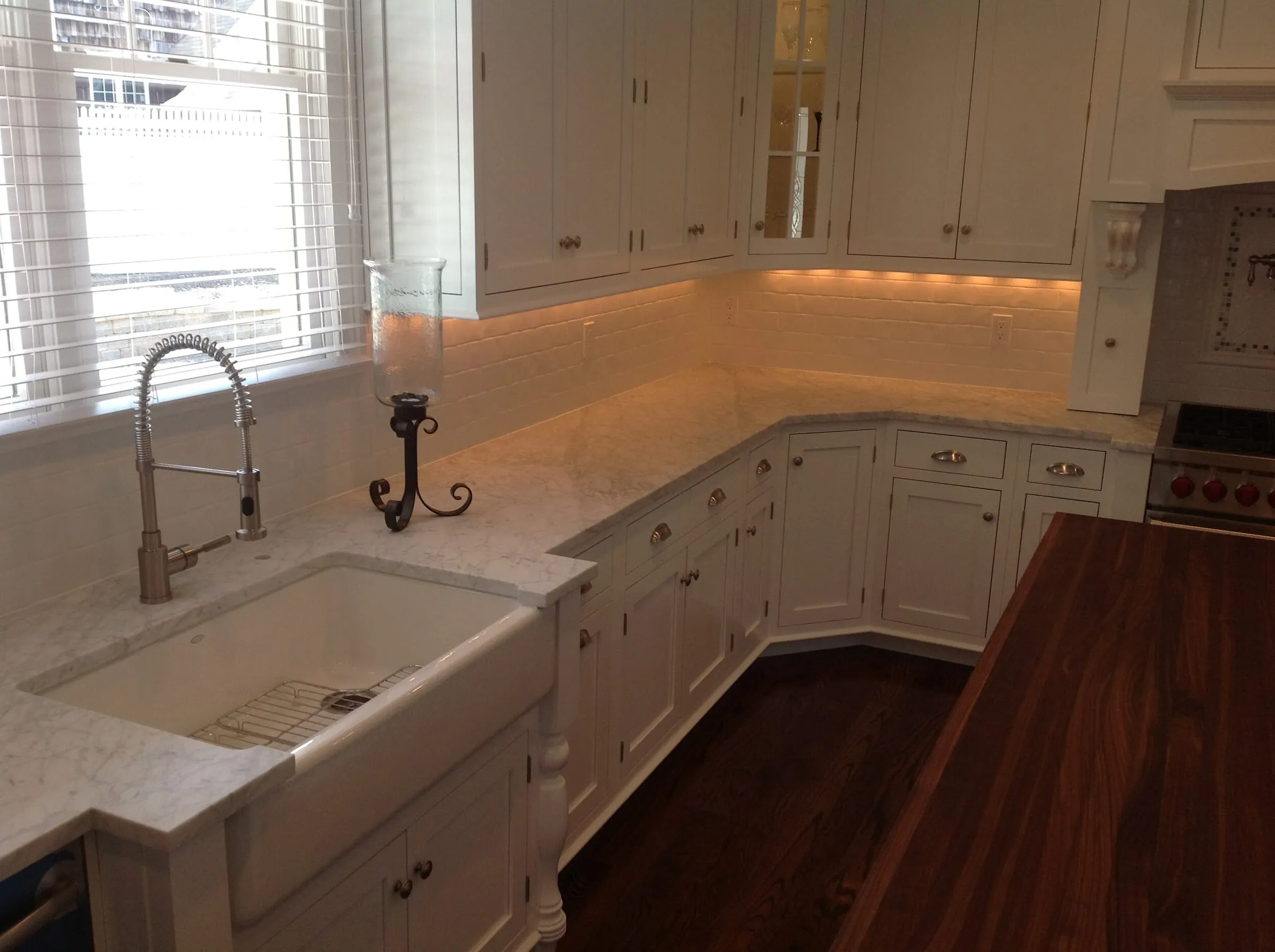
Many kitchens use two materials. One of the kitchens on our custom kitchens and baths page pairs marble with walnut. Our countertops page has more photos, and you can contact us to talk through your project.