The first decision in most kitchen and bath projects is whether to buy stock cabinets or have them built. The answer depends on the room, the schedule and the budget, and for a lot of kitchens it turns out to be a mix of both.
What the terms mean
Stock cabinets are built in a factory to a catalog of fixed sizes. Widths usually step up 3 inches at a time, so a base cabinet comes 12, 15 or 18 inches wide and so on, in the door styles and finishes that line offers.
Semi-custom cabinets also come from a factory, but the catalog is longer. You get more sizes and finishes, and you can change things like the depth of a cabinet or add built-in storage.
Custom cabinets are built for one room. Every box is made to the dimension the space calls for, in the material, door style and finish you pick. We build ours in our own shop in Hicksville.
When stock is the right call
Stock works well when the room is a plain shape and close to standard dimensions. A straight run or an L with a normal ceiling height can be laid out in stock sizes, with a filler strip closing the gap at the end of a run.
It also wins on time. Some of the lines we carry can be delivered in a few days, which matters if you’re getting a house ready to sell or the old kitchen is already in a dumpster.
And it costs less. A factory building the same box thousands of times will beat a shop building it once.
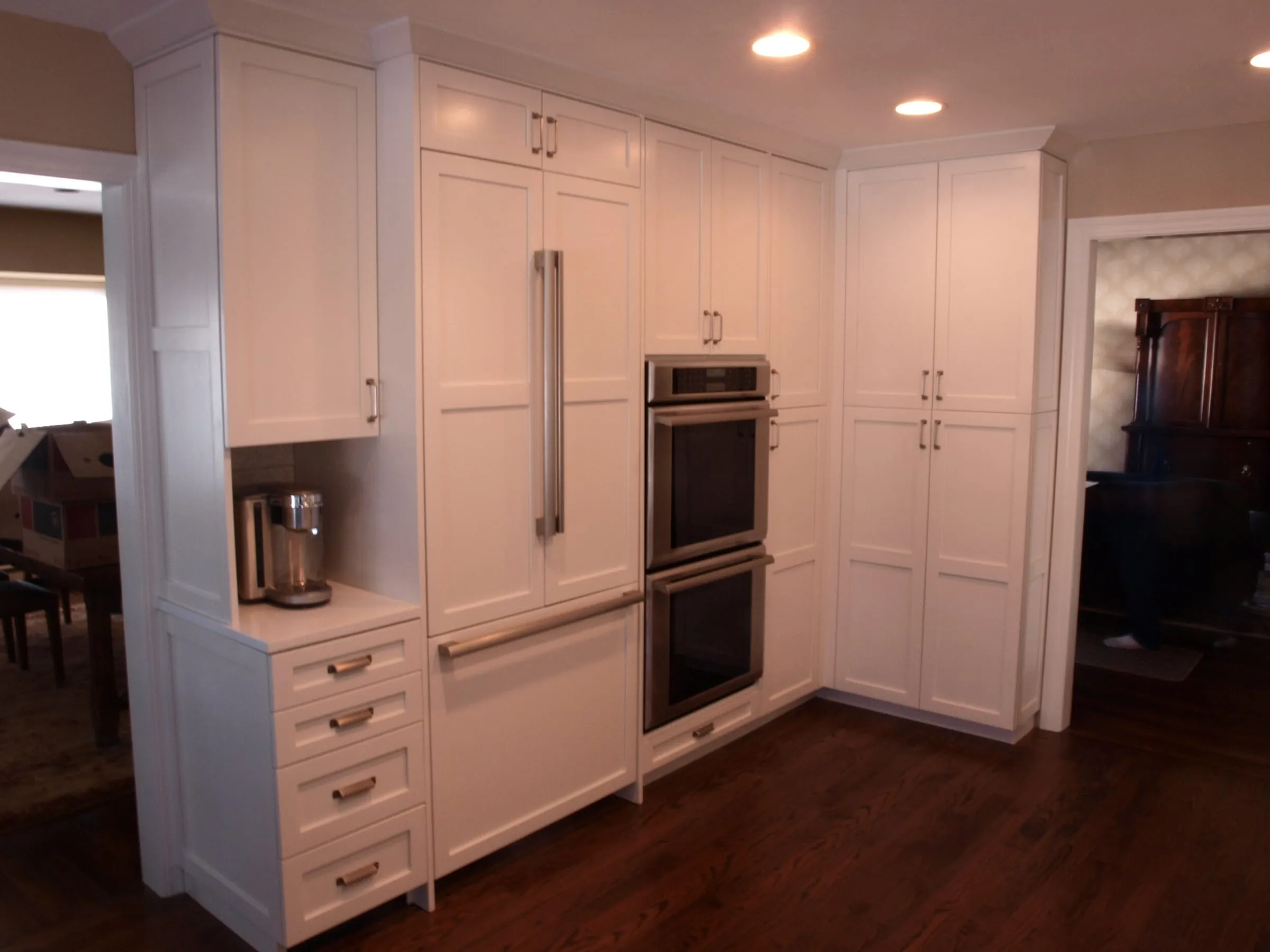
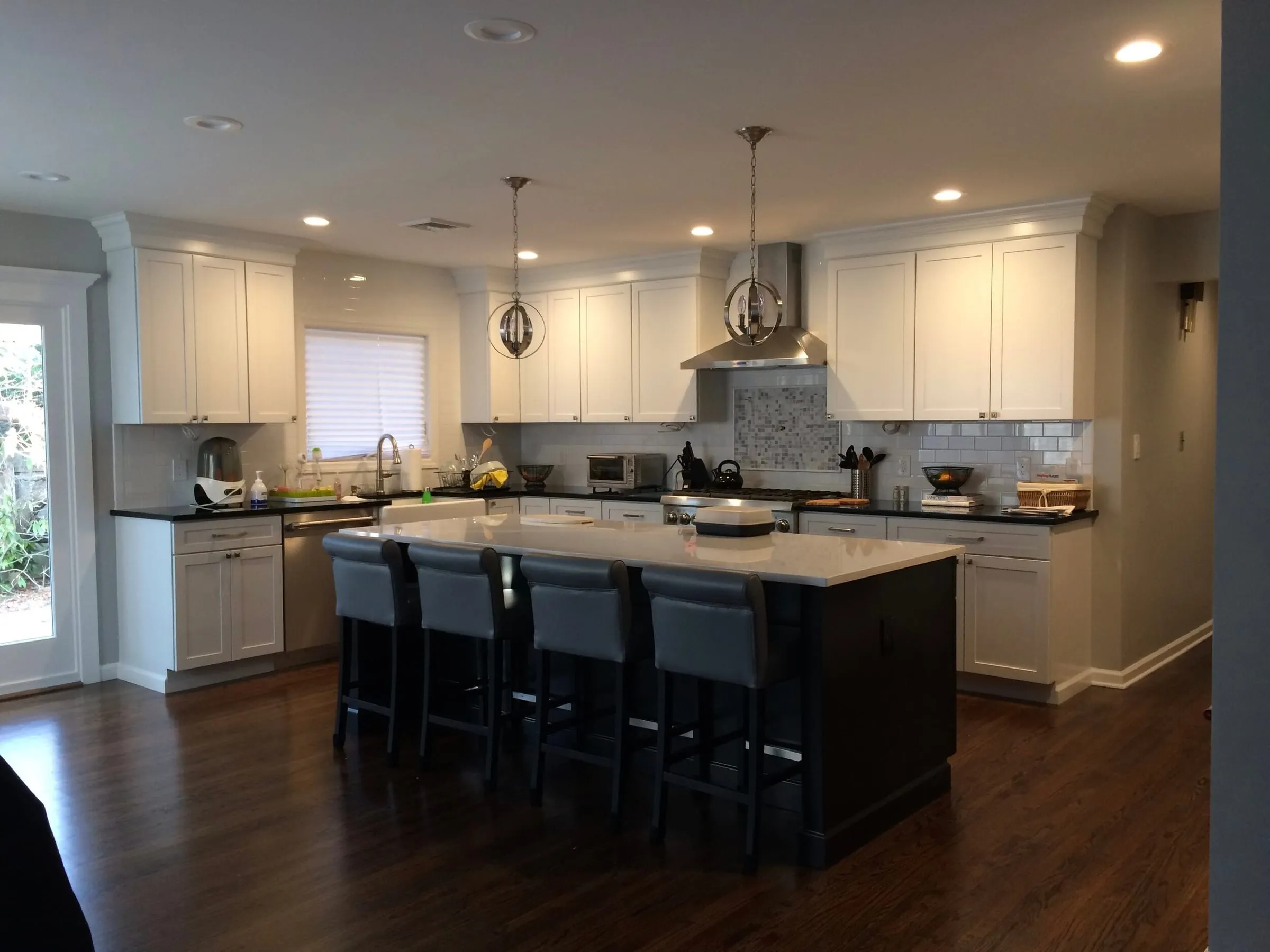
The lines we carry run from value priced to semi-custom: KraftMaid Vantage, Merillat, Tedd Wood and Wolf Classic. You can see kitchens built with them on our stock kitchens and baths page.
When custom earns its price
Custom makes sense when the room won’t cooperate. A lot of houses in Nassau and Suffolk went up in the building boom after the Second World War, and many of their kitchens are small, with a soffit overhead or a chimney chase eating one corner. In a room like that, 3-inch steps leave you with wide fillers and dead space. A cabinet built to the inch uses the whole wall.
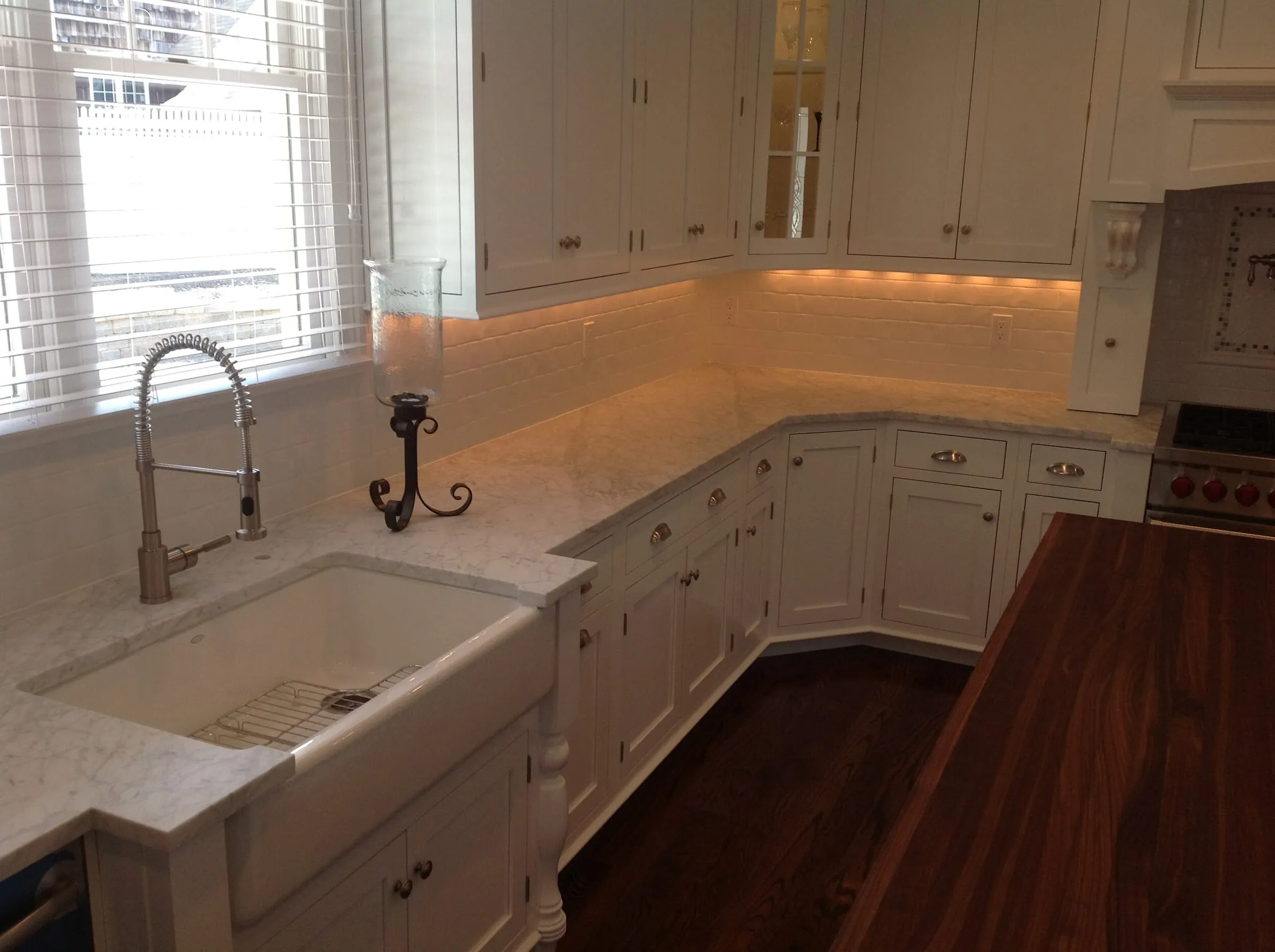
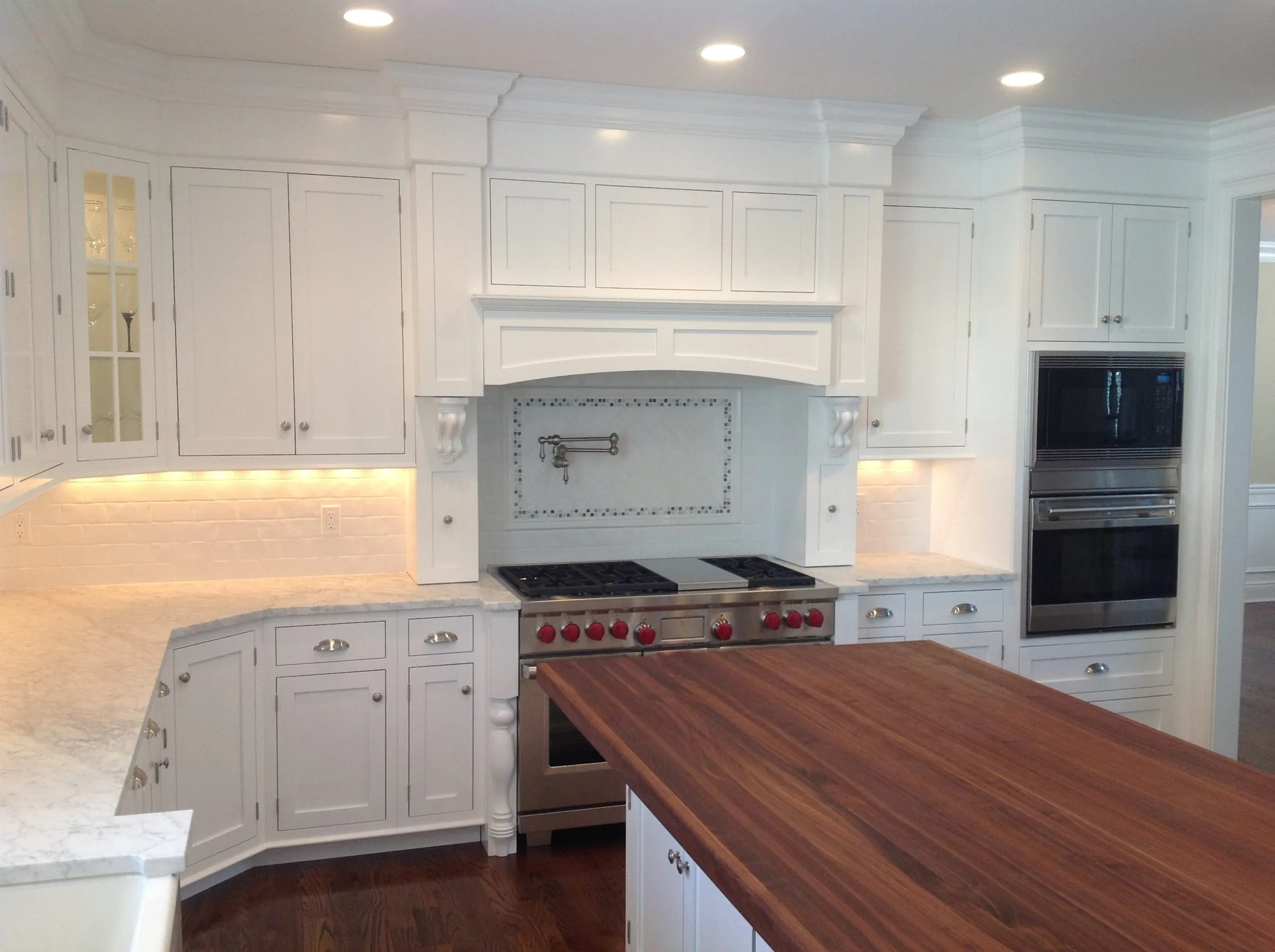
It also makes sense when you want something a catalog doesn’t have: a door style matched to the trim in the rest of the house, a species like walnut, a hutch that looks like furniture, or a vanity for a bathroom with odd dimensions. Our custom kitchens and baths page shows what that looks like.
Mixing the two
You don’t have to pick one. A common approach is stock or semi-custom cabinets for the main runs and a custom piece where the room needs it, such as a narrow pantry beside the refrigerator or a window seat. Since we sell stock lines and build custom cabinets ourselves, ask us to look at your room both ways.
What moves the price
Whichever way you go, the same few things drive cost: the material, the door style, the finish, and how many drawers and pull-outs you ask for. Drawers cost more than doors, and a painted finish usually costs more than a stained one. A plain kitchen and an elaborate one from the same line can be far apart in price, so comparing stock with custom only means something once both are drawn for your room.
Before you visit
Bring rough measurements of the room, including the ceiling height and where the windows, doors and plumbing are. Photos help. With those we can sketch a layout and tell you which route fits. The design consultation is free. Contact us or stop by the showroom at 794 South Broadway in Hicksville.